

Dancehall, by Bernard F. Conners
New York, 1982. The body of a young woman has washed up on the shore of Lake Placid. She's been submerged for twenty years, her missing-person case long abandoned - but the appearance of the body has brought new evidence to the surface, and the police reopen the investigation. Suddenly every former conclusion is under scrutiny, and a hoard of buried secrets is set to be unearthed; the ghosts of the past are back, and they bite. Twenty years ago, this woman was murdered. And Dave, our narrator, knows exactly who she is.
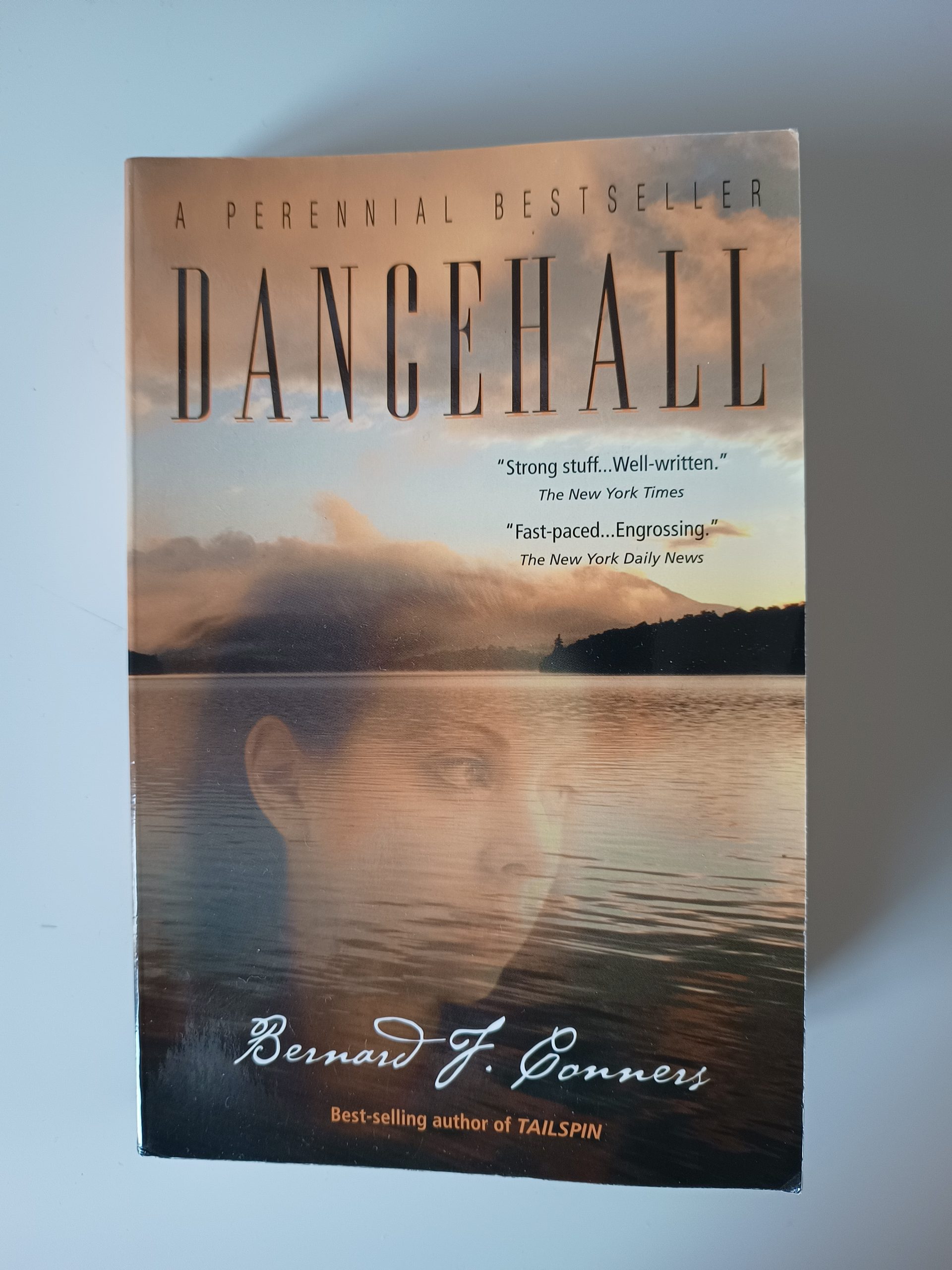
'Dancehall' promised to be an excellent suspense thriller. It had all the ingredients - an unsolved murder, a neighbourhood brimming with dark secrets, and a paranoid protagonist who finds himself embroiled in the case. I was looking forward to it, but sadly it missed the mark for me. This review details why, but I'll start with what I liked.
Conners did a great job of the dialogue throughout. The characters spoke like real people, and their interactions were completely believable. That's not easy to achieve as a writer, and it had me hooked from the first conversation. The other thing Conners did very well was creating a sense of the uncanny. In every chapter, I had a fantastic prickly-neck feeling of unease; it was eerie, it was unsettling, it was suspenseful. Dave spends most of the novel balancing on the precipice of his demise, and whenever he thinks he's found his footing, we can see that disaster is waiting in the shadows, poised to topple him. Even in the rare moments of stability, the birds on the lake wail like a woman crying. Spine-tingling stuff.
But now we come to the things that irked me about this book. Firstly, I found its morals troublesome. Lots of the characters had done reprehensible things (that was kind of the point) but I was dubious about the way in which Conners represented them, and in particular how he positioned the reader to feel. For example, we discover in a flashback that Dave, whilst innocent of murder, has had an affair whilst engaged to his wife Sue, and that he has taken advantage of a woman who was trying to resist his advances. We also witness the police investigators using a hideous form of blackmail against a suspect. These characters - Dave, the police - are supposed to be the 'goodies'. We're hoping that Dave can clear his name, that the police can find the real perpetrator, and yet Conners has them do these terrible things.
Now, don't get me wrong: my issue was not simply that the goodies did bad things. Heroes, obviously, can be flawed, and any well-drawn human character will have moral complexities and shortcomings. A black-and-white right vs wrong would be simplistic and unrealistic, and although it's a little annoying, there's nothing actually wrong with having a main character who's not very likeable. The problem was that the above behaviours were never called into question, nor critiqued. I felt that as a reader I was being expected to fully sympathise with Dave in spite of his serious misdemeanours, and to back the police in spite of their immoral methods, because they were the good guys. Every wrong was automatically excused because it wasn't the murder being investigated (and dare I suggest, because men in high places have a certain licence?); Conners wrote as though his story was morally black-and-white, even though it wasn't.
Perhaps I'm too much Dr Jekyll and not enough Mr Hyde - maybe I was supposed to relish watching all the depravity unfold from my comfy seat on the moral high ground. But to be honest, I felt a bit uncomfortable about where I thought my readerly sympathies were supposed to lie, and I would have preferred to see Dave's complexity acknowledged more openly.
The second thing that let the book down was its dated attitudes. It was published in the 80s, and unfortunately some of its thinking hasn't aged very well. The plot twist when one of the characters turns out to be gay didn't pack half the punch Conners probably meant it to, because in 2026 being gay is (rightly!) no big deal. There were also a few moments where the narratorial eye exhibited a suspiciously objectifying attitude towards women: Dave's wife Sue is first introduced to us by two male characters talking about how much they fancy her, and then when she actually appears in a scene, the narrator sneaks in a description of her 'shapely calves' before she even gets to say anything! I get that she was supposed to be a 'femme fatale' kind of character, but even so, the sexualisation was there without any self-awareness or critique of this approach to women, and that didn't sit right.
I kept reading mainly because I wanted to know who committed the murder. I guessed it correctly before the reveal, but it was a satisfying conclusion. Overall, 'Dancehall' had a strong concept and some great suspenseful writing, but unfortunately the reading experience was marred because it was so of-its-time. The attitudes that underpin it no longer hold, and the wrongdoings of certain characters are simply not excusable in this day and age. Being the male main character should not make you above reproach. This might have been a fantastic read once upon a time, but today I was disappointed. I won't be setting out to read any more Conners.