

Rebecca, by Daphne du Maurier
'Rebecca' is a classic, and until about a week ago I hadn't read it. To be honest, I was a bit ashamed that I hadn't - it's so well-known, so iconic, so reputed. Frequently hailed as the best psychological thriller of the 20th Century, Daphne du Maurier's magnum opus is so ubiquitous in bookish conversations that I could even have told you its opening line - but I knew nothing more than that. So when I found it in the library, I knew the time had come to fill the gap. Time to make this 'must-read' a book I had read. And I'm glad I did!
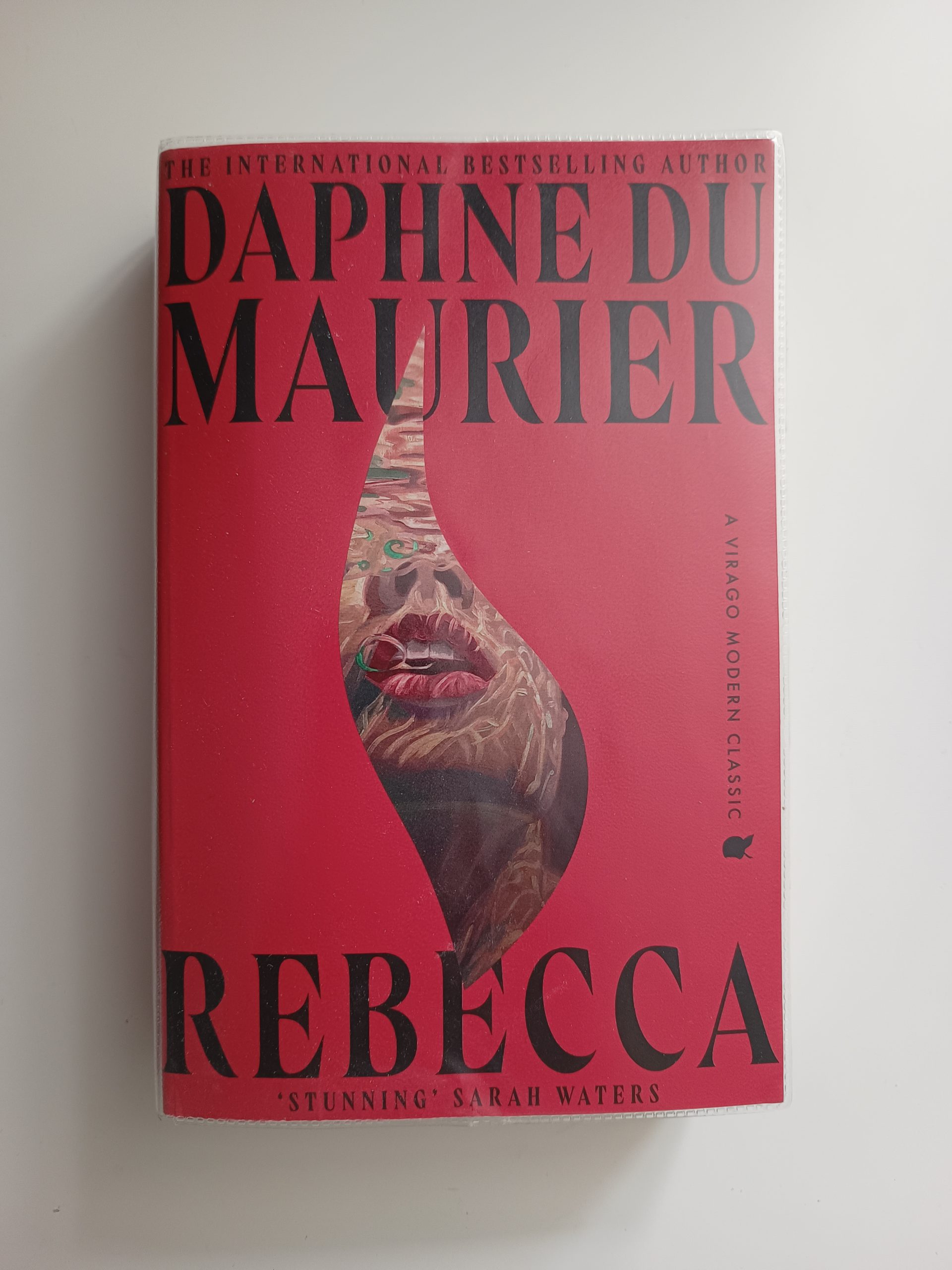
Everyone knows Maxim de Winter. He is the master of Manderley, the most enviable stately home in the South of England, and only last year his wife Rebecca tragically died in a freak drowning accident. Rebecca was glamorous, popular and beautiful - everything everyone wanted to be - and Maxim is torn apart by her loss. So it comes as a surprise when the county's most talked-about widower suddenly proposes to a new woman. She is shy, gauche and juvenile, nothing like Rebecca, but she marries him swiftly and moves in to Manderley. A happy outcome all round, it seems. But it isn't long before the cracks begin to show: by marrying Maxim, the new Mrs de Winter is replacing Rebecca, and that is a very difficult task indeed.
To me this was a novel of two very clear halves, which were delineated by the twist that occurs in the middle of the story. For the sake of any rare readers who, like the Annabel of a week ago, haven't read 'Rebecca', I won't give away the details of the twist. Suffice it to say that it drastically changes the heroine's relationship with Maxim, her perception of her surroundings, and her opinion of herself. The shift is so dramatic that the novel's tone, pace and stakes are completely different in the second half. I actually enjoyed this latter half significantly more than the beginning, but I found the duality quite an unusual reading experience, and I'm not convinced I fully liked it.
The first half of 'Rebecca' follows our main character as she settles into life at Manderley - except this rather mis-sells it, because the whole point is that she never quite manages to settle. She is so unsure, unfamiliar and uncomfortable that everything feels decidedly on edge for about 200 pages. The class divide is stark: Manderley is a place of opulence and entitlement, where your every act is a social performance and your every request is fulfilled by a host of attentive servants. But Maxim's new wife is herself from a background of service: she knows simplicity, humility, frugality. Being Mrs de Winter is a completely different way of life, which du Maurier highlights quite painfully.
The relationships, too, are strained. Maxim is cold and shut off, his mind still consumed with thoughts of his former wife. And as for Mrs Danvers, the menacing housekeeper - she's the most compelling villain I've read for a long time. Her manner is disquieting, her words are icy, and her still-fervent adoration for Rebecca is sickening and sinister. The new Mrs de Winter is utterly out of place - she cowers in the shadow of Rebecca, who still has everyone in a chokehold. It has to be said that du Maurier executes this dark, brooding tone masterfully. There's an oppressive wrongness weighing down every chapter in this half, and it's really well written.
I suppose what's annoying is that our main character is so spineless. She's constructed to be so - du Maurier doesn't even honour her with a name. But as an empowered modern woman, it's frustrating to be reading through the eyes of someone so feeble. She scurries around hoping not to be spotted, she makes foolish decisions, she panders to her critics, and when Maxim mistreats her she resignedly accepts her lot. You just wish she would speak up for herself a bit!
But her narration, whilst infuriating, is extremely effective. As readers we are completely encased in her point of view. We are never once let out from inside her head, and it's this stifling perspective that makes 'Rebecca' a psychological thriller. You see, the more we read, the more we realise that the narrator's perception of things is not completely accurate. We are reading through distorted lenses.
The novel's second half, then, is what transpires once the heroine realises what's actually going on. The scales fall from her eyes and she now finds herself guarding a terrible secret. From this moment, the novel takes on the pace of a thriller. The stakes are raised, everything begins to unravel, and we root for Mrs de Winter in a completely different way. I couldn't put it down! What makes it even more compelling is that the gothic menace is even closer to the surface than at the start: what simmered away in the shadows before is brought into sharp focus now. No sooner is our narrator set free from her ignorance than she is tugged into the epicentre of the sinister truth. It's intoxicating, and it's brilliant.
So did I enjoy 'Rebecca'? Well, I'm not sure 'enjoyment' quite reflects how it felt to read this. It was unsettling, moody and dark, and I wasn't at all endeared to the main character. However, it was undeniably a very well-done novel. It lured me straight into its clutches, and kept me right where it wanted me. There was something strangely seductive about it. So no, I didn't necessarily enjoy it, but I was definitely impressed by it. 'Rebecca' is a very good book, and I'm glad I have now read it.
You can buy 'Rebecca' from Waterstones by following this link (I'll receive a small commission if you do):
Rebecca, Daphne du Maurier - Waterstones